Detailed case study available on desktop.
A feeling-based cycle journaling app for menstrual self-knowledge
Product Design · UX Research · AI Integration
Duration: 2025 - PRESENT
Role: Lead Designer/Art Director
THE PROBLEM
Cycle apps assume they know you better than you do
There are plenty of cycle tracking apps on the market. Our frustration wasn't with the concept — it was with the assumptions baked into every single one. They ask you to select symptoms from a predefined list. They map your cycle onto a 7-day calendar grid that was never designed to hold biological time. They tell you what to expect based on population averages, not on you.
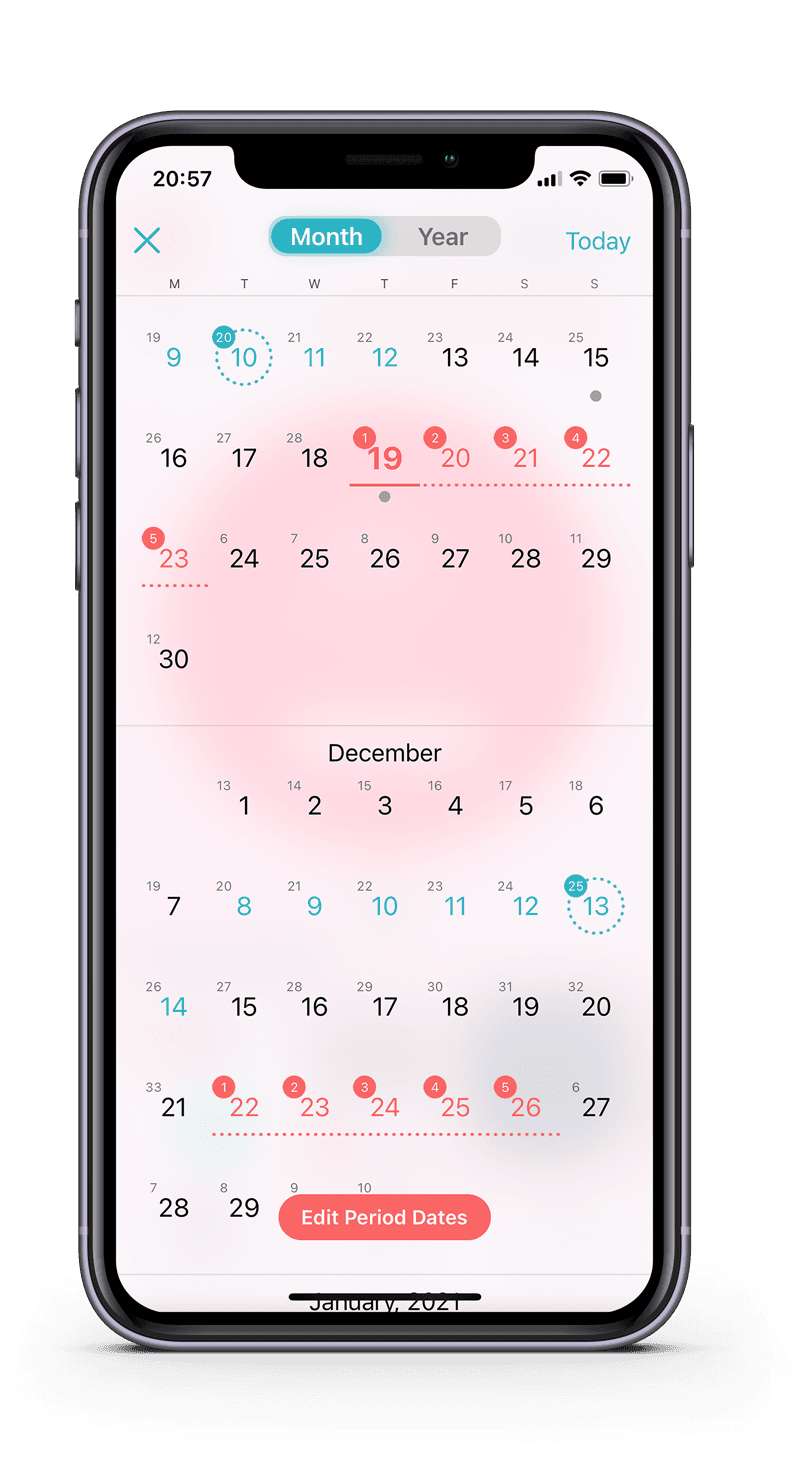

↑ The majority of cycle tracking apps remain tethered to traditional calendar views and manual symptom logging.
01
Calendar grids distort cyclical time into 7-day rows built for work schedules
02
Symptom checkboxes make you look for symptoms — not listen to yourself
03
Population averages flatten what is personal, variable, and uniquely yours
STARTED ON GOOGLE SPREADSHEET
Our Discovery and Experiments with Cycle Journaling
We had built the method ourselves — a Google Sheets prototype that asked us to log feelings in our own words, alongside a few metrics we chose ourselves. No dropdown lists. No benchmarks.
We started noticing patterns we'd never seen in any app. Not symptoms. Language. The same words kept showing up around the same days of each cycle.
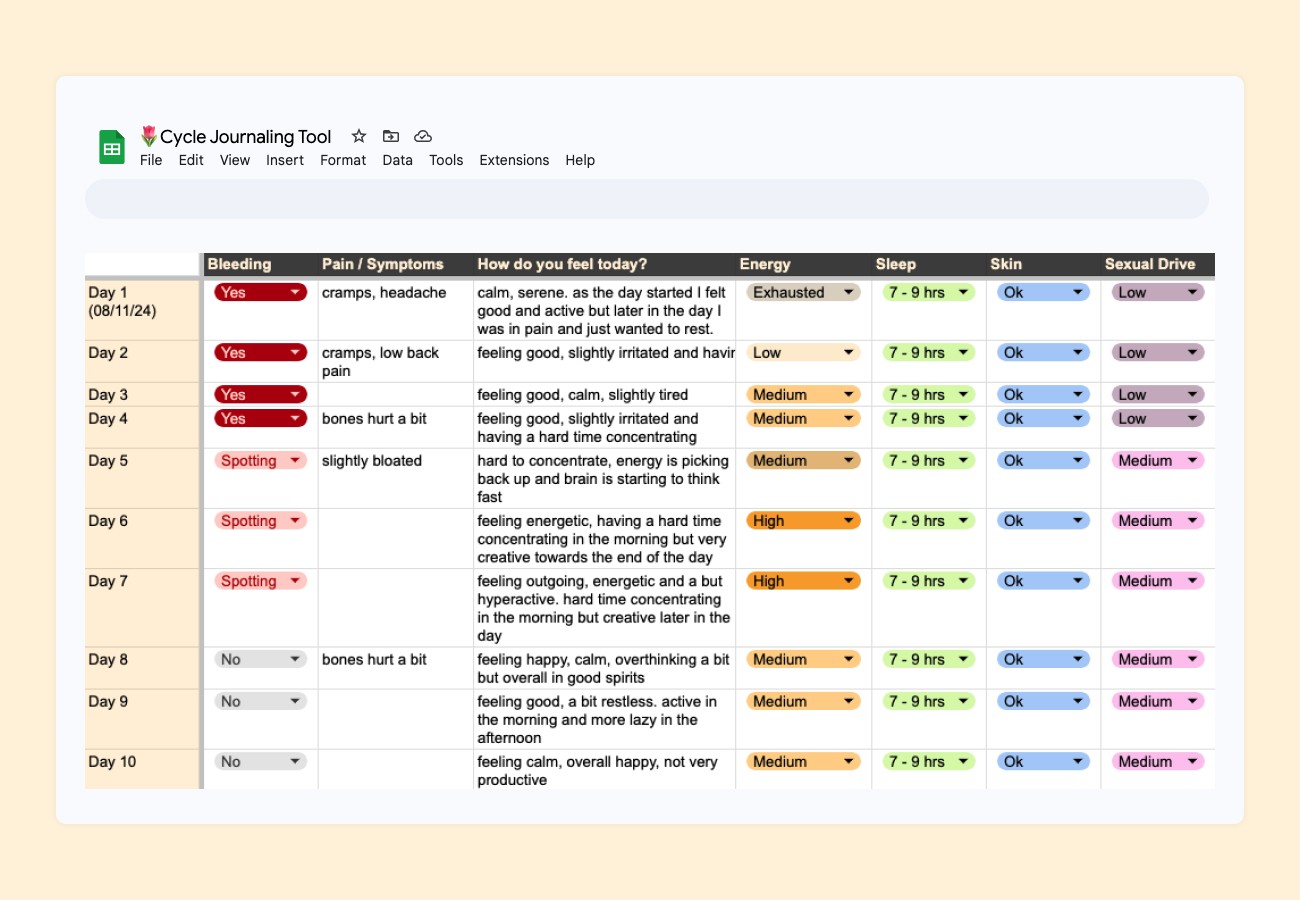
↑ Google Sheets prototype — real data anonymized language patterns across cycles
Patterns live in language, not checkboxes.
The same words kept showing up around the same days. "Foggy." "Restless." "Everything feels possible." "I don't want to be perceived." These weren't on any dropdown list — they were ours.
THE SCIENCE IS REAL
This is not imagined — it reflects real neurochemical shifts
Estrogen levels fluctuate throughout the menstrual cycle, and this directly affects how the brain performs. Many people who menstruate report memory and cognitive difficulties at times associated with changes in ovarian steroid levels — and research backs this up.
We want people who menstruate to feel empowered by their cycle rather than constantly defeated by having one. We want to help them build more empathy for themselves when the world around them offers none.
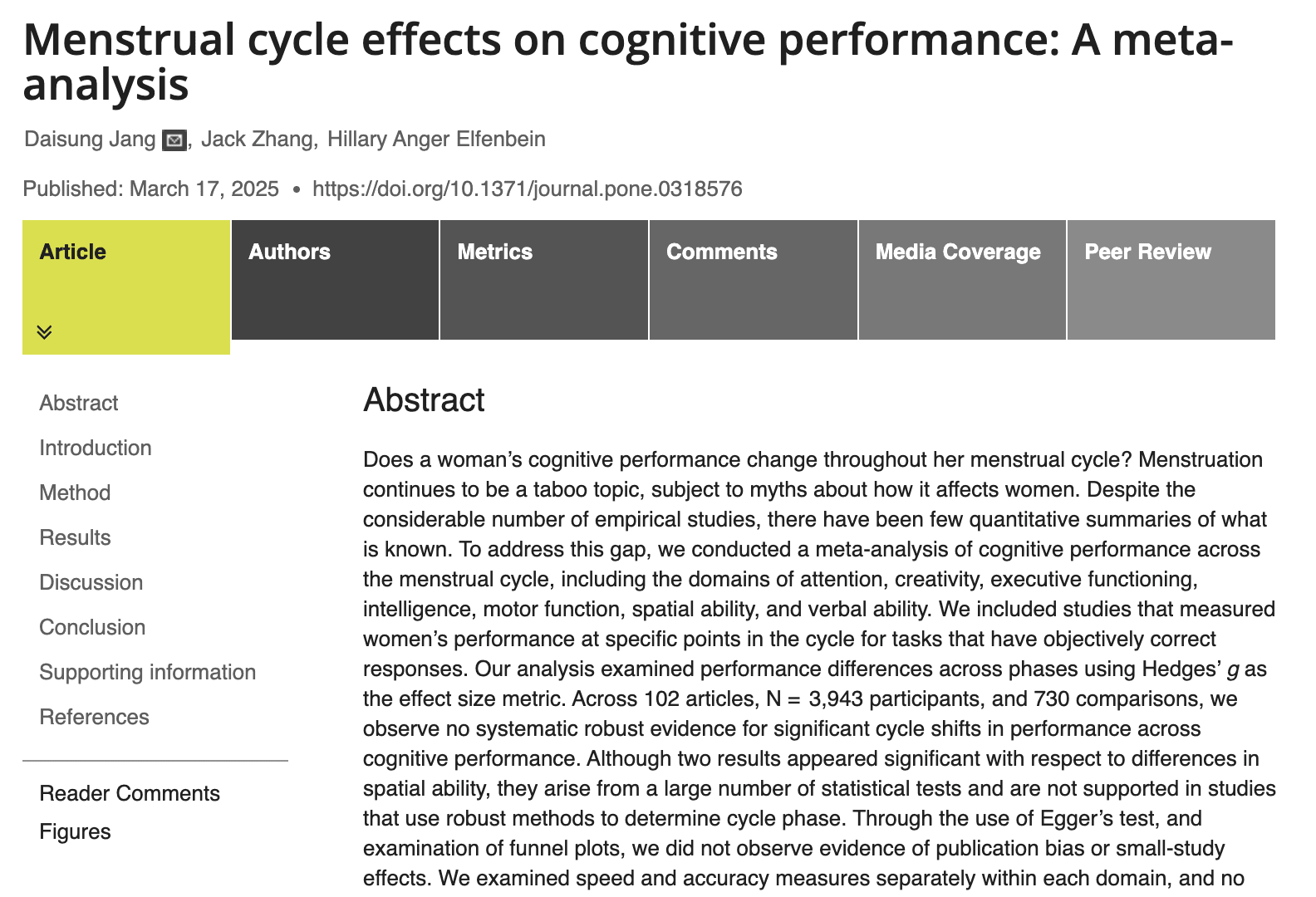
↑ Source
THE SOLUTION
Our design principles
01
You define your own metrics
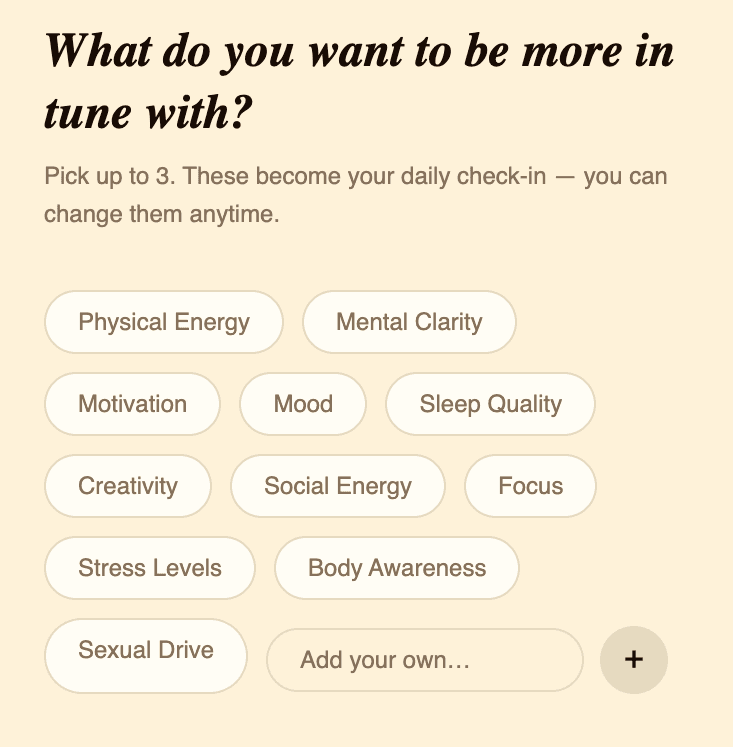
Instead of a predefined symptom list, you choose up to three things you want to track — from energy, motivation, mental clarity, appetite, mood, or anything you add yourself.
02
You write, not select
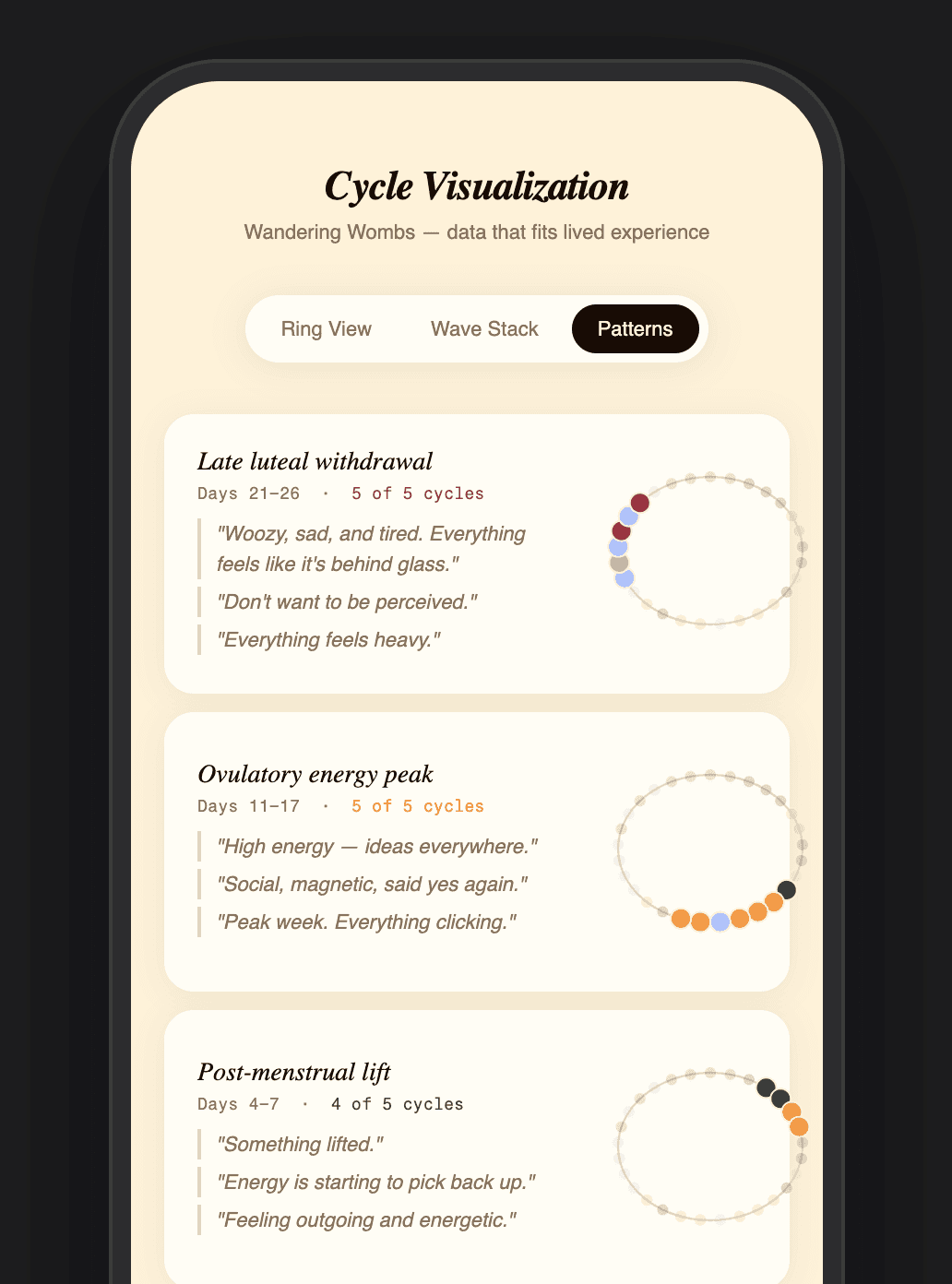
Every day you write a few sentences in your own voice. The LLM processes entries over time to find patterns — and when patterns emerge, it surfaces them briefly, without interpretation.
03
Reassurance rather than prediction
You know your body best. Rather than dictating how you should feel, this app acts as a sounding board, reflecting the insights you already possess about yourself.
04
The visualization fits the data
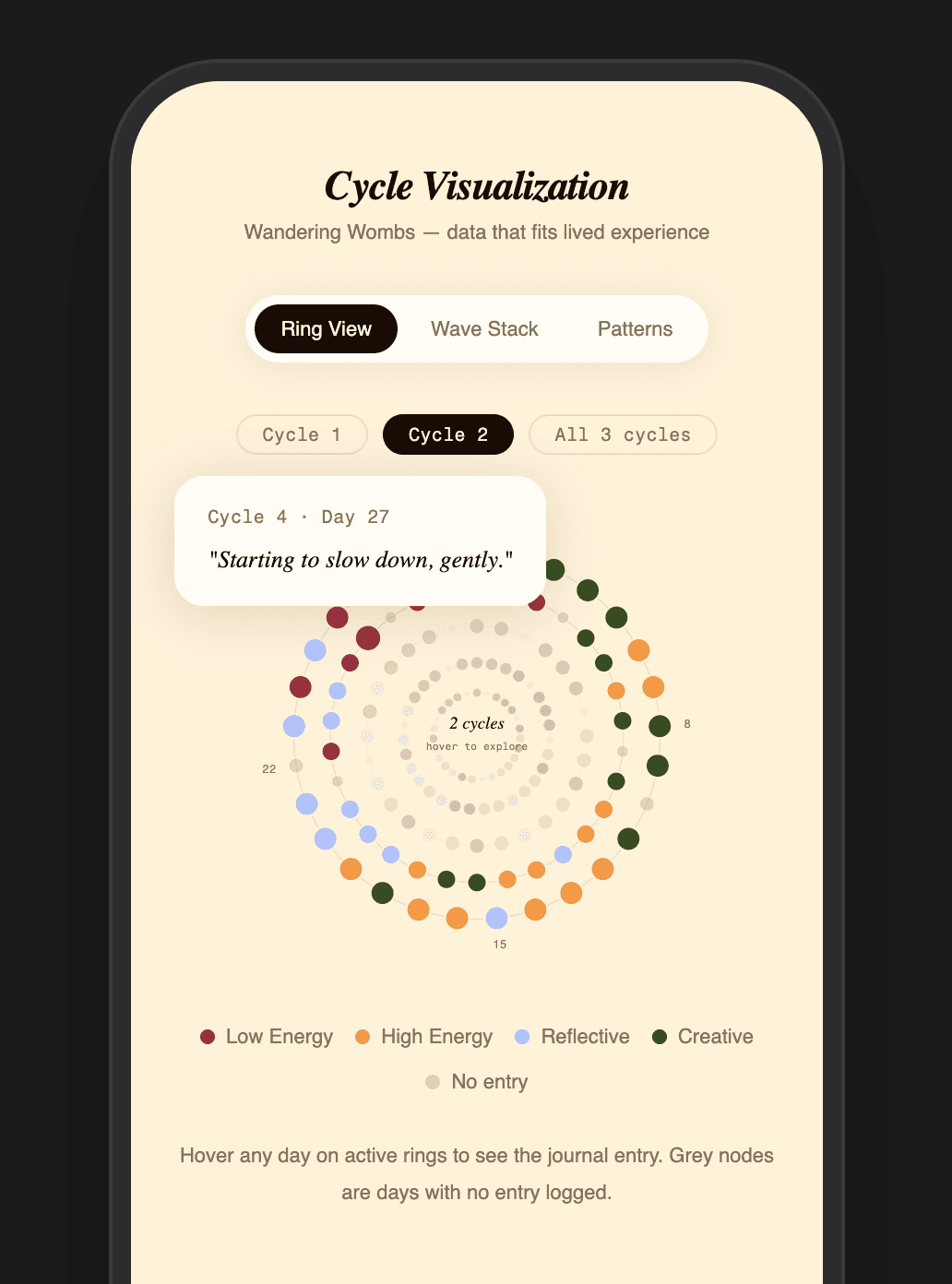
The cycle is displayed as a cycle — not a calendar grid. Days are mapped around a circular timeline that respects the actual shape of menstrual time.
THE EXPERIENCE
From first open to self-trust
01 · ONBOARDING
You define your own metrics
User selects up to 3 tracking dimensions. No defaults, no pressure. Their choices stay for the cycle.
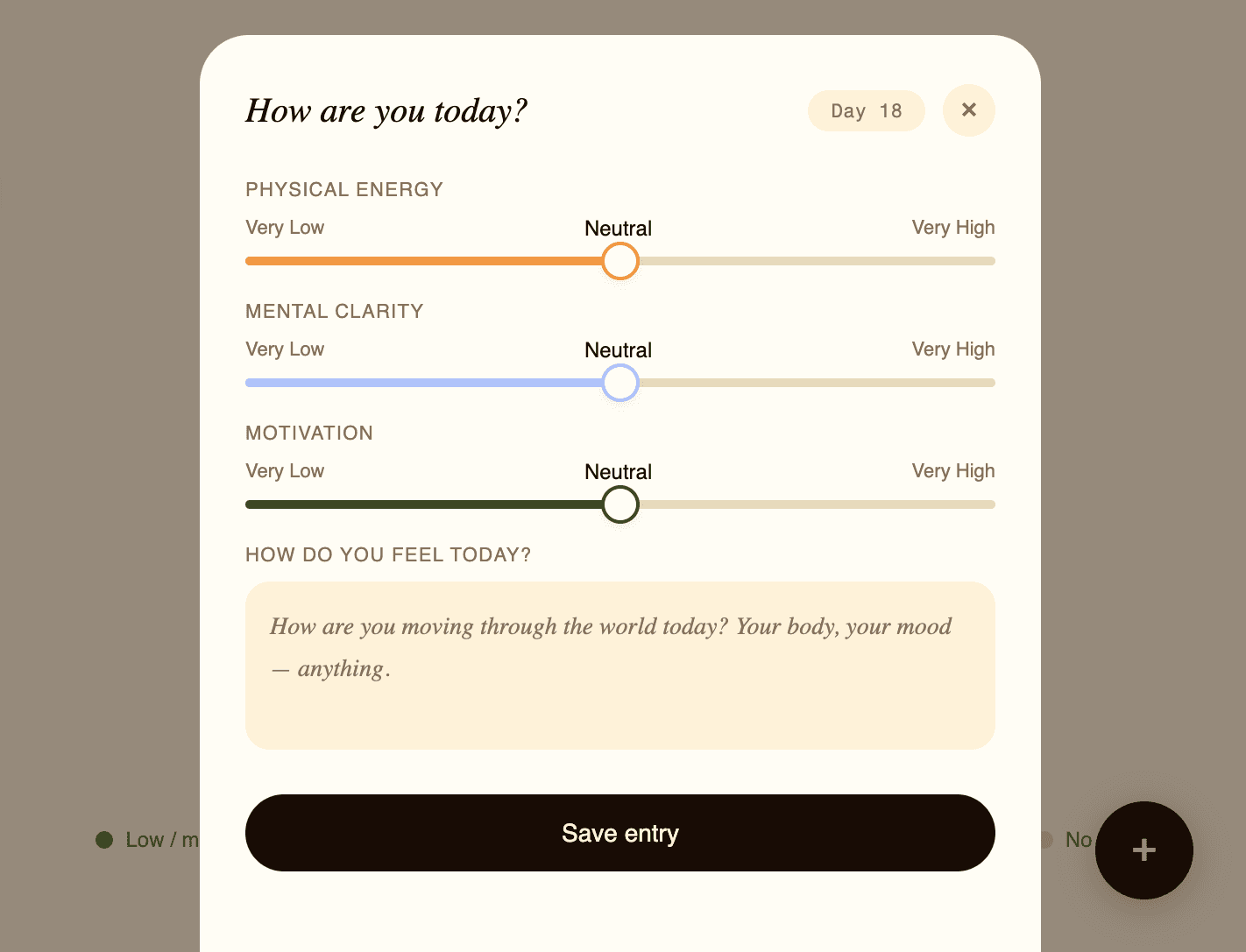
02 · DAILY CHECK IN
Your metrics, your words
How are you today? 3 chosen metrics on a 5-point scale. A freeform journal prompt. No streaks. No guilt for missed days.
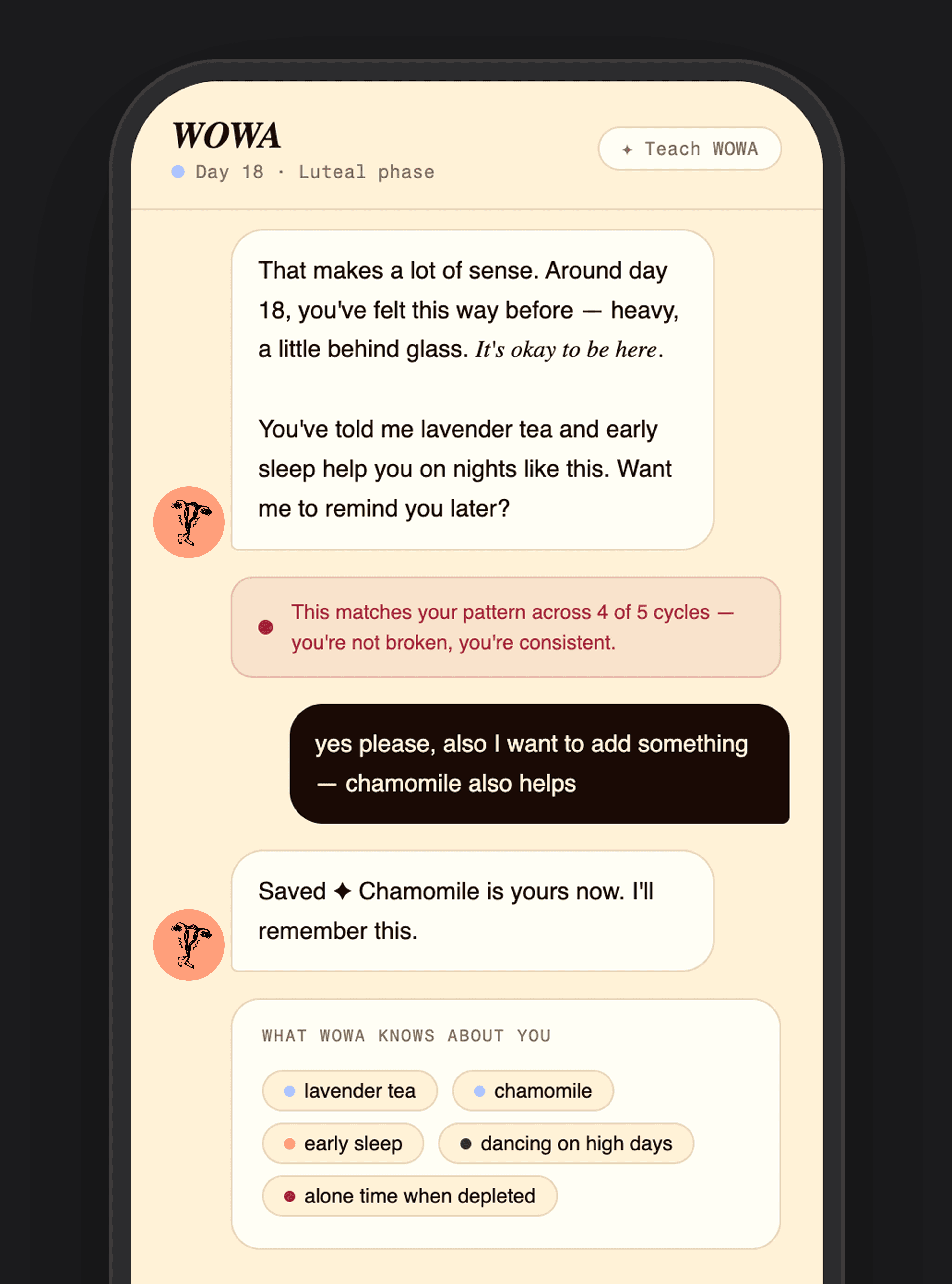
03 · AI AGENT RESPONDS
Reassurance rather than prediction
"It's okay to feel this way."
WOWA, the Wandering Wombs AI agent validates without predicting. It surfaces your own patterns, offers your own remedies, and saves the good and bad days.
04 · RING VIEW
The visualization fits the data
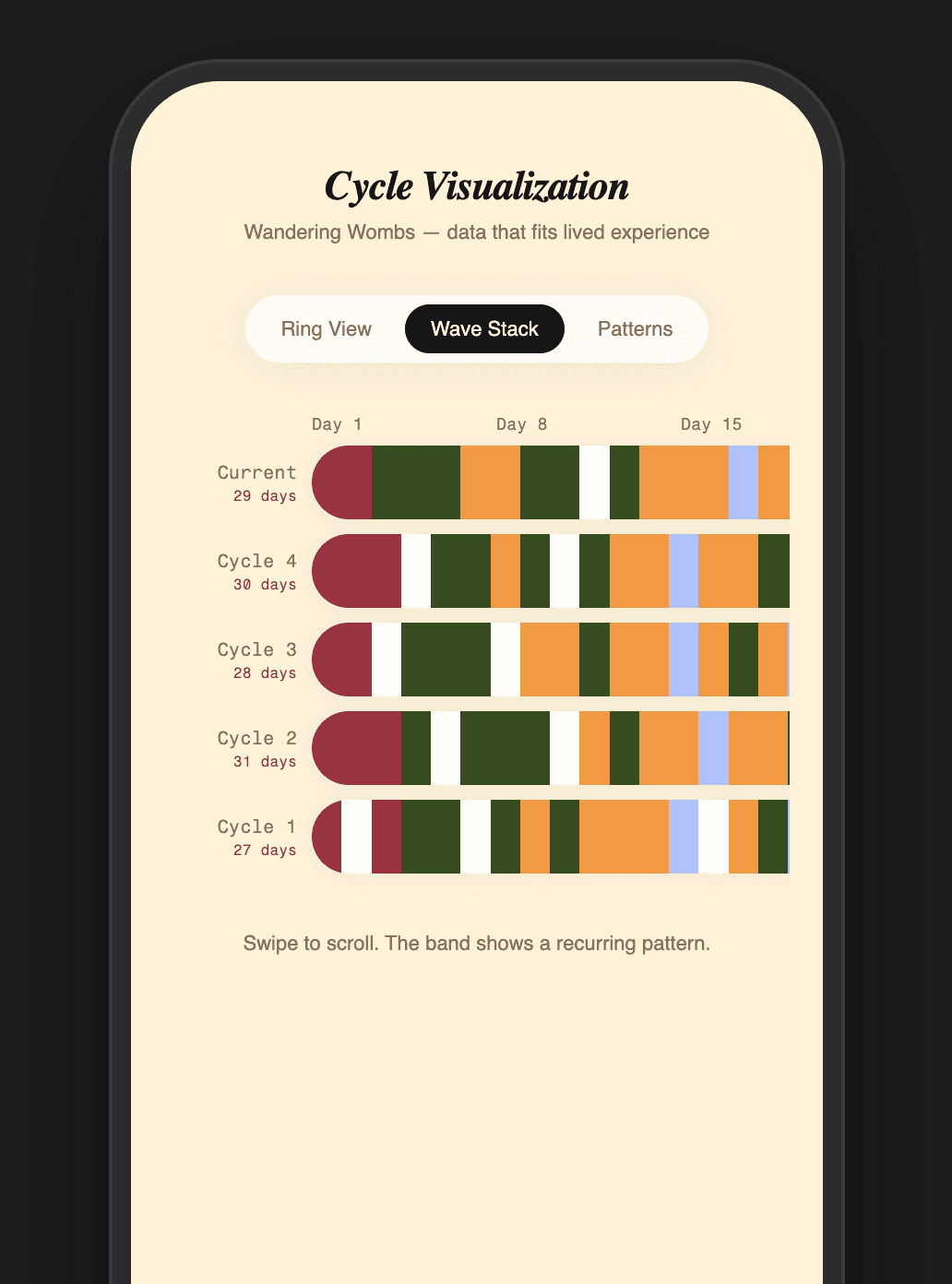
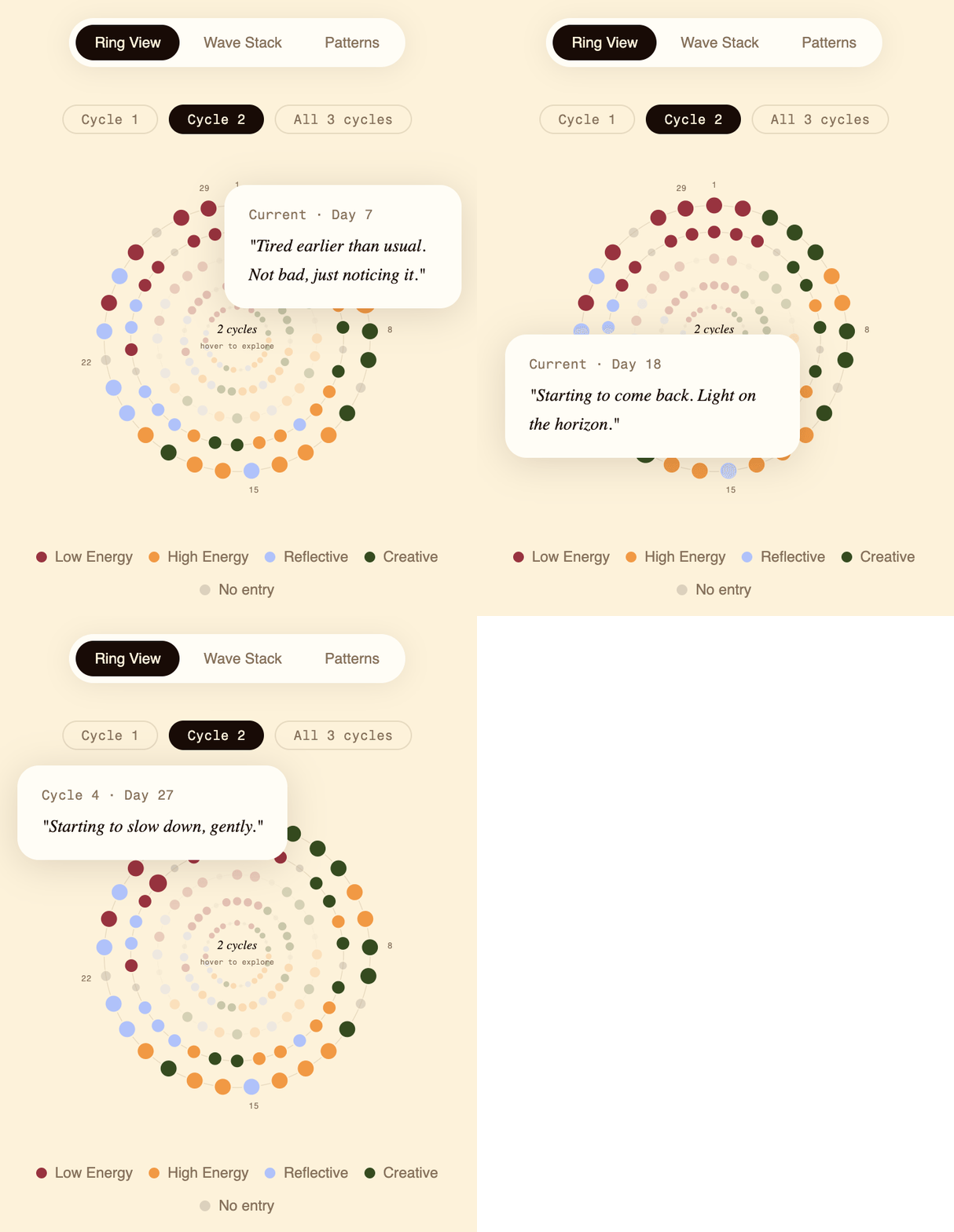
Multiple cycles stacked as circles. The same arc appears in the same place across time. The pattern becomes visible — on your terms.
CYCLE VISUALIZATION
Time as a cycle, not a grid
Instead of a calendar, the cycle is displayed as an oval. Each day is a node around the circumference — color and texture encode the metric data. Seeing multiple cycles laid on top of each other is where the patterns become visible at a glance.